

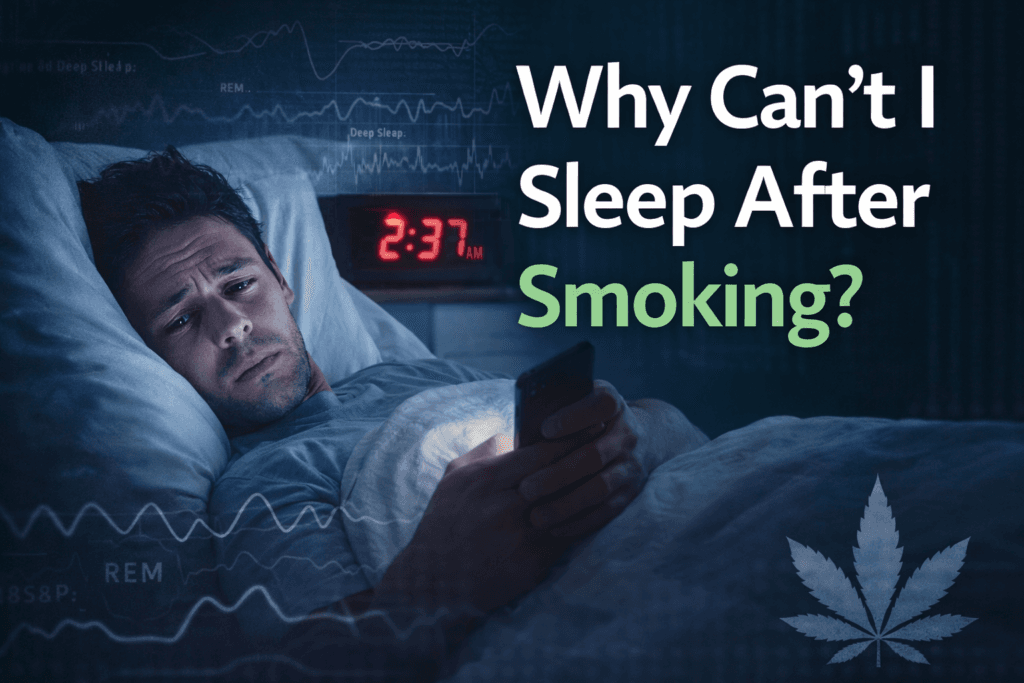
Cannabis and sleep is a topic that gets a lot of attention from patients, but the science is still more mixed than many product labels or social posts suggest. Some people report falling asleep faster or feeling more relaxed after using THC or CBD-containing products, while others notice lighter sleep, next-day grogginess, or reduced benefit over time. The biggest takeaway is that cannabis may help some patients with sleep in the short term, but the results can vary based on cannabinoid ratio, dose, terpene profile, timing, tolerance, and the reason sleep is disrupted in the first place.
Introduction:
Sleep problems can come from many different causes, including anxiety, chronic pain, stress, medication side effects, irregular schedules, and sleep disorders such as insomnia or sleep apnea. That is one reason cannabis and sleep is not a simple yes-or-no subject. A product that helps one person relax may leave another person feeling mentally active, physically uncomfortable, or overly sedated the next morning. Research reviews suggest that cannabinoids may help some people fall asleep sooner or feel that sleep quality improved, but the current evidence is still limited and often based on small studies, observational data, or short-term use rather than strong long-term clinical proof.
How THC May Affect Sleep:
THC is the cannabinoid most often linked to drowsiness, sedation, and the sleepy effect some patients feel after evening use. In the short term, THC may help some people fall asleep faster, especially when pain, stress, or restlessness are part of the problem. At the same time, THC can also change sleep architecture, including REM sleep, and those changes may not always be beneficial over time. Regular THC use may reduce REM sleep, which helps explain why some patients report fewer dreams or less vivid dreaming after using cannabis at night. That does not automatically mean sleep quality improved, and some people notice a rebound in vivid dreams if they suddenly stop using THC or cut back after frequent use. For some patients, that means initial relief can be followed by tolerance, lighter sleep, or a feeling that the product no longer works the way it did at first.
How CBD May Affect Sleep:
CBD is often discussed as a calming option, especially for patients whose sleep issues are tied to anxiety, stress, PTSD, or nighttime hyperarousal rather than a simple inability to feel tired. The evidence for CBD and sleep is still limited, and results can vary widely by dose, product type, and the individual using it. Some patients report that CBD helps them feel calmer at night, which may indirectly support sleep when racing thoughts, stress, or trauma-related tension are part of the problem. That said, current research does not support treating CBD as a guaranteed fix for insomnia, nightmares, or night terrors. For patients dealing with PTSD-related sleep disruption, CBD may be worth discussing with a qualified medical professional as part of a broader treatment plan, but it should not be presented as a proven stand-alone solution. The more realistic expectation is that CBD may help some people settle the nervous system and sleep more comfortably, while doing much less for others. (CBD and Insomnia Study)
Potential Benefits Patients Report:
Patients commonly say cannabis helps in a few specific ways. Some use it because it helps them feel physically relaxed at bedtime. Others say it reduces racing thoughts, pain, nausea, or nighttime restlessness. Many users subjectively report improved sleep, but that kind of self-reported improvement is not the same as strong proof that cannabis reliably improves sleep for everyone or that it should replace medical evaluation for chronic sleep problems. The practical takeaway is that patient experience matters, but it still needs to be weighed alongside research limits and safety concerns.
Risks, Tolerance, and Next-Day Effects:
Cannabis may help some patients in the short term, but it also has downsides worth taking seriously. Frequent THC use may lead to tolerance, meaning higher doses are needed to get the same effect. Some users report next-day grogginess, slower thinking, or a hungover feeling if the dose is too strong or taken too late. In some cases, cannabis may help with falling asleep while still failing to improve overall sleep quality. There is also a difference between using cannabis to feel more relaxed and actually fixing the cause of chronic sleep disruption. For that reason, cannabis should not be treated as a complete substitute for good sleep hygiene, medical guidance, or evaluation of underlying sleep problems.
When Patients Should Be More Cautious:
Patients should be especially cautious if they have chronic insomnia, untreated sleep apnea, major anxiety, heart concerns, or if they are combining cannabis with alcohol, sedatives, or other medications that affect alertness. Cannabis should not be assumed to be a medically sound answer for every sleep issue. Patients with persistent sleep trouble should consider professional evaluation rather than relying only on self-experimentation.
Practical Tips for Florida Patients:
- Start low, especially with THC-heavy products used at night.
- Track the product type, dose, time used, and how you felt the next morning.
- Avoid increasing the dose too quickly just because a product worked once.
- Be careful with products that feel sedating but leave you foggy the next day.
- Focus on sleep hygiene too, including routine, light exposure, caffeine timing, and bedroom conditions.
Final Thoughts:
What science says about cannabis and sleep is more nuanced than the marketing around it. Some patients may benefit, especially in the short term or when pain, anxiety, or restlessness play a role. But the evidence is still developing, and cannabis does not affect everyone the same way. The smartest approach is to treat cannabis as one possible tool, not a guaranteed fix, and to pay attention to dose, product type, tolerance, and next-day function. Patients with ongoing sleep issues should talk with a qualified medical professional rather than relying only on trial and error. (Cannabis and Sleep Research)
Related Article:
Tips for Caregivers Supporting Patients
For more patient education resources, visit our Education Center