

Category: Patient Guide
Subcategory: Symptom Management
Introduction:
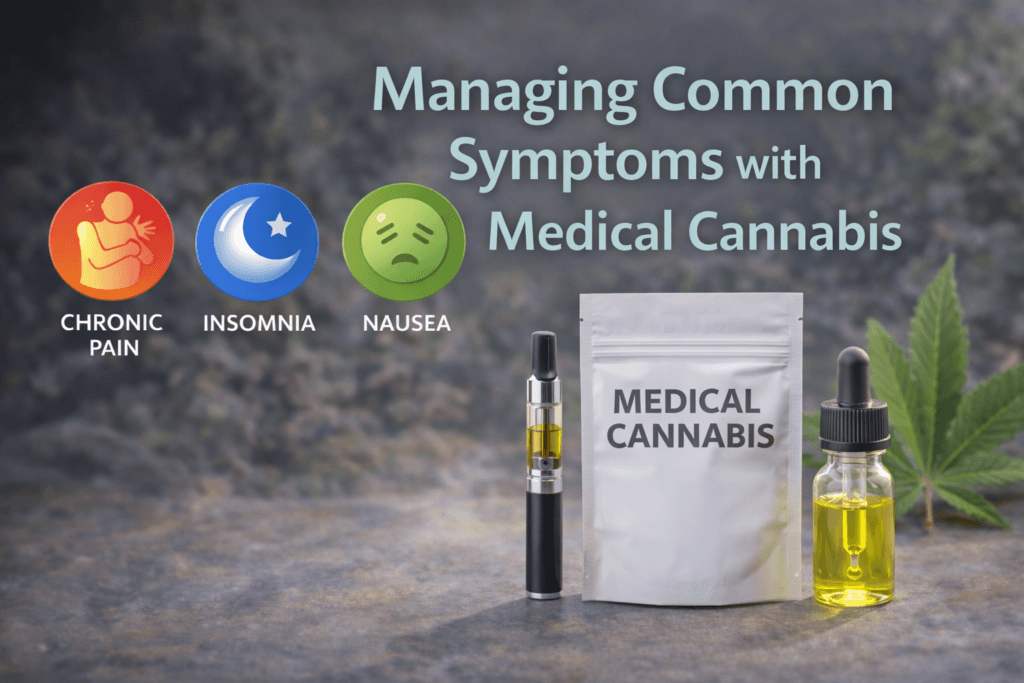
Medical cannabis is used to manage a variety of symptoms including chronic pain, anxiety, sleep disorders, nausea, and inflammation. Selecting the right strain, cannabinoid profile, and consumption method is critical for effectiveness.
Pain Management:
- THC is often effective for neuropathic and chronic pain.
- Indica-dominant strains may provide muscle relaxation.
- Topical applications can target localized pain without systemic effects.
Anxiety and Mood Disorders:
- CBD-rich strains may help reduce anxiety without psychoactive effects.
- Start with low THC doses; high THC can increase anxiety in sensitive individuals.
Sleep Disorders:
- Indica strains with moderate THC can support sleep onset and duration.
- Avoid high-THC sativa strains in the evening, as they may increase alertness.
Nausea and Appetite:
- THC can stimulate appetite and reduce nausea.
- Patients undergoing chemotherapy or experiencing appetite loss may benefit from edibles or tinctures for longer-lasting effects.
Monitoring and Adjusting:
- Always begin with low doses.
- Track symptom improvement and side effects.
- Consult your physician for personalized guidance.
Conclusion:
Effective symptom management with medical cannabis requires education, careful dosing, and monitoring. Patients should work closely with healthcare providers to optimize treatment safely.
Citations / References:
- Whiting PF, et al. Cannabinoids for Medical Use: A Systematic Review and Meta-Analysis. JAMA, 2015.
- Florida Department of Health, Office of Medical Marijuana Use. Patient Guidance Materials.