

Introduction
Cannabis terpenes help explain why two strains with similar THC percentages can smell, taste, and feel completely different. For Florida medical cannabis patients, learning how to read terpene profiles can make product selection more consistent than shopping by THC alone.
Terpenes are naturally occurring aromatic compounds found in cannabis and many other plants, including citrus, pine, lavender, pepper, hops, herbs, and flowers. In cannabis, they help create the aroma and flavor of each strain. They may also influence how cannabinoids like THC, CBD, CBG, and other plant compounds feel when used together.
This does not mean terpenes are guaranteed medical treatments. One terpene will not affect every patient the same way. Terpene data is best used as a tracking tool that helps patients compare products, read COAs, and identify which strain profiles work best for their own body.
What Are Cannabis Terpenes?
Cannabis terpenes are aromatic compounds produced by the plant. They are part of the reason one strain may smell like citrus, another may smell earthy and musky, and another may carry pepper, gas, fruit, floral, or pine notes.
In cannabis flower, many terpenes are found in the same resin-rich trichomes that contain cannabinoids. These trichomes are the frosty structures visible on quality flower and solventless concentrates. When a product is harvested, dried, cured, stored, or extracted poorly, terpene quality can drop quickly. That is why fresh aroma, proper packaging, and terpene numbers on a certificate of analysis matter.
Patients can compare terpene-forward products through the Florida Strain Registry strain database, where strain entries include THC, terpene percentages, genetics, COA links, and product notes when available.
Why Cannabis Terpenes Matter
THC percentage tells only part of the story. A high-THC flower with weak terpene content can feel flat, harsh, or one-dimensional. A lower-THC product with a stronger terpene profile may feel more flavorful, balanced, and useful for a patient’s goals.
Cannabis terpenes matter because they help patients compare aroma, flavor, freshness, and overall experience. They can also help explain why two batches of the same strain name may feel different from one dispensary to another.
- Aroma: citrus, pine, floral, earthy, gas, spice, fruit, herbs, or dessert notes.
- Flavor: how the product tastes when smoked, vaporized, dabbed, or consumed.
- Experience: whether the product feels calming, uplifting, clear, heavy, functional, or sedating.
- Freshness: stronger preserved terpene content can suggest better handling or storage.
- Consistency: patients can track which terpene profiles repeatedly work well for them.
Common Cannabis Terpenes Patients Should Know
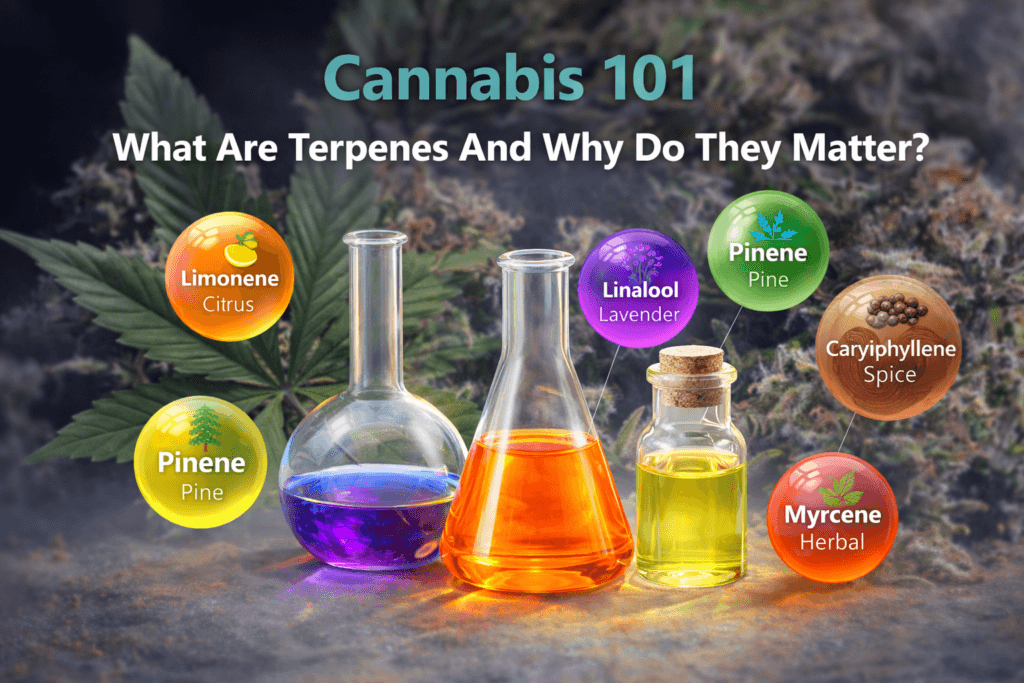
Myrcene
Myrcene is commonly associated with earthy, musky, herbal, and sometimes mango-like aroma notes. Patient reports often describe myrcene-heavy products as relaxing, body-forward, or evening-friendly. A strain such as Star Island 43 by Goldflower shows how a myrcene-led profile can create an earthy base while still allowing other terpenes to shape the final experience.
Limonene
Limonene usually brings citrus notes such as lemon, orange, lime, or grapefruit. Patients often associate limonene-forward strains with brighter aroma, cleaner flavor, and a more noticeable lift. Limonene does not automatically make a strain energizing, but it often adds brightness to the overall profile.
Beta-Caryophyllene
Beta-caryophyllene is known for peppery, spicy, woody, and warm notes. It is one of the most important cannabis terpenes because it is also studied for activity at CB2 receptors. Many Florida patients pay attention to caryophyllene when looking for products that feel grounded, calming, or body-focused.
Linalool
Linalool is associated with lavender, floral, soft, and slightly sweet notes. In cannabis, linalool can help soften a profile that might otherwise feel sharp, gassy, or racy. It is commonly discussed in connection with calm, comfort, and a smoother finish.
Pinene
Pinene carries pine, forest, rosemary, and herbal notes. Some patients associate pinene with clarity and alertness, especially when it appears alongside limonene or terpinolene. In heavier profiles, pinene may help keep the experience from feeling too foggy.
Humulene, Ocimene, Terpinolene, and Bisabolol
Supporting terpenes can add important character. Humulene often brings woody, hoppy, or earthy notes. Ocimene can add sweet, herbal, or tropical brightness. Terpinolene may create a sharper citrus-herbal profile. Bisabolol can add soft floral, honey-like, or chamomile-style notes.
How Cannabis Terpenes Work With Cannabinoids
Cannabis effects are not created by THC alone. Cannabinoids, terpenes, flavonoids, product type, dosage, tolerance, route of use, and patient biology all play a role. This is why two products with similar THC numbers can feel completely different.
The phrase “entourage effect” is often used to describe the way cannabinoids and terpenes may work together. Research is still developing, and patients should not treat terpene charts as medical guarantees. However, terpene profiles remain useful because they help patients connect aroma, flavor, lab data, and personal experience.
For more patient education, read Why Terpenes Matter More Than THC for Effects and How Terpenes Influence Mood Without Intoxication.
How to Read Cannabis Terpenes on a COA
A certificate of analysis, or COA, is the lab report connected to a cannabis product. A strong COA may show total THC, THCA, CBD, total terpenes, individual terpene percentages, contaminants, batch number, and testing date.
When reading terpene data, patients should look for:
- Total terpenes: the combined terpene percentage in the product.
- Top three terpenes: the dominant compounds that usually shape the main aroma and experience.
- Balance: products with multiple meaningful terpenes may feel more layered.
- Batch date: older products may lose aroma and flavor if stored poorly.
- Product type: flower, live resin, live rosin, distillate, edibles, and full melt hash express terpenes differently.
For example, Grapefruit Cookies Six Star Full Melt Hash by Goldflower shows how high terpene content can support a bright, citrus-forward profile in a premium solventless product.
How Florida Patients Can Use Terpene Profiles
The best way to use cannabis terpenes is to track patterns. Patients should note which terpene combinations feel helpful, which feel too heavy, which feel too racy, and which products provide the most consistent experience.
A simple patient tracking method:
- Write down the strain or product name.
- Save the COA link if available.
- Record THC percentage and total terpene percentage.
- List the top three terpenes.
- Note aroma, flavor, onset, duration, and effects.
- Compare results over time instead of judging one product alone.
This approach is more reliable than chasing the highest THC number. It also helps patients have better conversations with physicians, caregivers, and dispensary staff.
Trusted Cannabis Terpene Research
For patients who want deeper background, the National Center for Complementary and Integrative Health provides a broad overview of cannabis and cannabinoids. The NIH has also discussed research interest in minor cannabinoids and terpenes. Peer-reviewed research continues to examine cannabis terpenes and the entourage effect in medicinal cannabis products.
Final Thoughts
Cannabis terpenes help explain why products with similar THC percentages can deliver different aromas, flavors, and experiences. They are not a cure-all, but they are one of the most useful tools patients can use when comparing Florida medical cannabis products.
Start with THC and product type, but do not stop there. Check the COA, look at total terpenes, identify the dominant terpenes, and track how each profile works for your body.
Explore more patient education in the Education Center or browse terpene-forward entries in the Florida Strain Registry strain database.